
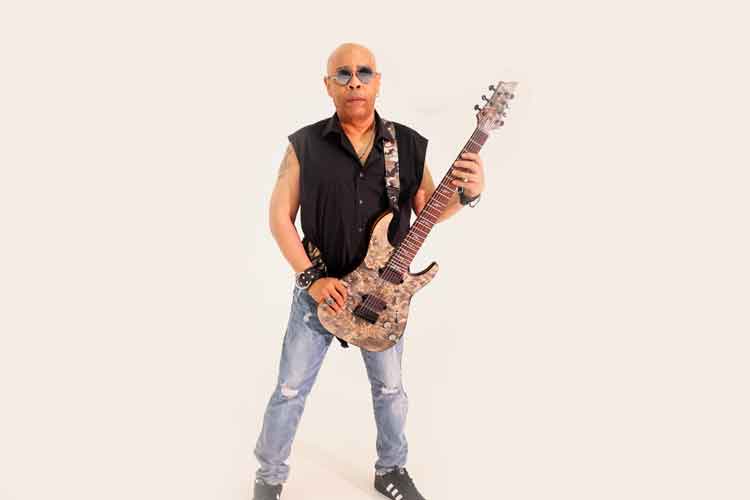
Before discussing Combat Zone, it is worth introducing the musician on the other side of my Zoom screen. Bruce Owens is a multi-instrumentalist, composer, and Berklee College of Music alumnus who has been making music in and around Boston for more than four decades. He is best known as the guitarist and one of the founding members of B.F. Raid, but describing Owens simply as a metal guitarist would overlook the breadth of his work. His playing moves fluidly between heavy metal, blues, jazz fusion, and classical music, while also extending beyond those traditions into abstract soundscapes. That broad musical vocabulary informs his approach to composition and arrangement, as well as his willingness to treat the guitar as more than a conventional rock instrument.
With B.F. Raid’s new album, Combat Zone, Owens and the band have created a record that reflects this willingness to move between musical worlds while telling stories rooted largely in the Boston they know. I spoke with Bruce over Zoom about how the album came together, the origins of its stories and riffs, and how he develops ideas with the rest of B.F. Raid. As this is TMRZOO, I also could not let a guitarist with Owens’ collection of guitars, pickups, amplifiers, and effects get through the conversation without discussing gear. That conversation eventually led us to seven-string guitars, a “stunt guitar,” and a stereo rig capable of transforming the instrument into something that no longer necessarily sounds like a guitar.
BILL FOSTER: Bruce, let’s start with the obvious question. You guys came back with Raided Again, and now we’ve got Combat Zone. Was another album always the plan?
BRUCE: Not really.
When we got B.F. Raid back together, the original goal was to finally record some of the old material properly. That’s what became Raided Again.
But I’ve always been writing.
Once the band heard some of the new ideas, they were excited to keep recording.
And I kept writing.
Eventually we realized we weren’t just revisiting something we’d done forty years ago. We had enough new material for another record.
BILL FOSTER: When you say forty years ago, how far back do these relationships actually go? Were you guys friends before B.F. Raid?
BRUCE: Some of us go back considerably further than the band.
I’ve known Bill since we were toddlers.
I’ve also known Len Ponn, our original bass player, for just as long.
And Bill went to junior high with our original drummer, Barry Silverman.
BILL FOSTER: Wait. Toddlers?
BRUCE: Yeah.
Basically my entire life.
BILL FOSTER: So Bill and Len knew each other as kids too?
BRUCE: No. That’s the strange part.
I knew both of them separately.
Bill and Len didn’t know each other.
Bill and I reconnected musically as teenagers, and when we formed B.F. Raid, that’s when Bill and Len met. But Bill already knew Barry from junior high, so when all of us got into the room together for the first time, there was this instant familiarity. Within the first five minutes, it felt like the band had already been together for years.
BILL FOSTER: So you’re the common denominator.
BRUCE: Exactly.
Two completely separate childhood friendships, plus Bill’s connection with Barry, eventually collided and became a heavy metal band.
BILL FOSTER: There had to be easier ways to introduce two friends.
BRUCE: Probably safer ones too.
[Laughs.]
BILL FOSTER: So after all that history, you get back together, make Raided Again, and suddenly you’re writing again. Where did the idea for Combat Zone come from?
BRUCE: It wasn’t really one big idea at first.
I was writing songs, and after a while I started noticing that a lot of them had something in common.
Boston kept showing up.
People, places, things we’d experienced, things we’d seen.
Eventually I started describing the record as an audio documentary about growing up and living around Boston.
BILL FOSTER: So is it a concept album?
BRUCE: Not in the traditional sense.
There’s no single story running from song one through song ten.
They’re more like snapshots.
Different places, people and time periods.
Some of it goes back decades. Some of it is much more recent.
BILL FOSTER: What version of Boston are we talking about?
BRUCE: Ours.
Not a swan boat anywhere on the record.
[Laughs.]
Bars, clubs, neighborhoods, characters, fights, tragedies, bad decisions, funny stuff.
The things we remember.
BILL FOSTER: The title Combat Zone obviously carries some very specific Boston baggage. Did the album title come first or the songs?
BRUCE: The songs.
The title made more sense as I realized what the record was becoming.
The old Combat Zone represents a certain Boston that doesn’t really exist anymore, but there are echoes of it in the city today.
One of the songs where that really came together was “The Greatest Show In Town.”
BILL FOSTER: What’s that one about?
BRUCE: Prostitution in Boston over the years.
Part of it came from what we were seeing while we were recording.
We’d be working and there was constantly something happening outside.
Initially somebody would look out the window and say, “You’ve got to see this.”
After you’ve been there long enough, though, you understand what you’re actually watching.
Women working the street. Addiction. Exploitation.
And people watching all of it happen.
That’s where “The Greatest Show In Town” came from.
The title is sarcastic.
BILL FOSTER: Was that what made you connect it to the old Combat Zone?
BRUCE: Yeah.
You start thinking about how prostitution existed in Boston decades ago versus what you’re looking at now.
The Combat Zone is gone. The city is dramatically different.
But here we are looking out a window decades later and women are still working the street.
Different surroundings. Different era. Same business.
That interested me.
BILL FOSTER: When you started digging back into that history, was there anything in particular that stuck with you?
BRUCE: The Robin Benedict case was definitely an influence.
She was a young woman working in the Combat Zone who became involved with William Douglas, who was a professor and researcher at Tufts.
He became obsessed with her and eventually murdered her in 1983.
It was a huge story around Boston.
BILL FOSTER: Is “The Greatest Show In Town” about her?
BRUCE: No.
That’s an important distinction.
The song isn’t about the Robin Benedict murder.
Her story influenced it because it’s part of the history surrounding prostitution in Boston and the old Combat Zone.
But the song is looking at the bigger picture across different eras.
BILL FOSTER: So it’s more about what changed—and what didn’t.
BRUCE: Exactly.
BILL FOSTER: Are all the songs tied to Boston?
BRUCE: Almost.
“Bullets From The Board” is the one song that steps outside Boston.
BILL FOSTER: What inspired it?
BRUCE: The history surrounding the Gunfight at the O.K. Corral and the larger mythology of the Old West.
That song came from wanting to explore a different kind of American conflict and legend.
BILL FOSTER: So nine Boston stories and suddenly Wyatt Earp walks into the room.
BRUCE: Pretty much.
Every documentary gets one story from somewhere else.
BILL FOSTER: When I listen to the album, musically it doesn’t stay in one place very long either. How do you write?
BRUCE: Usually it starts with a riff.
I’m constantly recording ideas in my home studio.
I might write something and have absolutely no idea where it belongs. Months later another riff comes along and suddenly I realize the two fit together.
Some of the material comes from pretty different musical places—traditional metal, punk, blues, progressive stuff, psychedelic things, even some Indian-influenced ideas.
The challenge is stitching those things together so they sound like one song.
BILL FOSTER: When you bring one of those ideas to the band, how complete is it?
BRUCE: It depends.
Sometimes there’s a pretty developed structure. Sometimes it’s essentially a collection of riffs and ideas.
But bringing it to the band is the beginning of another process.
Everybody contributes to what the song becomes.
BILL FOSTER: How so?
BRUCE: When Barry and Len weren’t available for the project, Jamie and Moose stepped in to help us bring the material to life.
Jamie might hear something rhythmically that changes a section completely.
Moose isn’t there just to follow my guitar. He’ll find a bass part that creates another movement underneath it.
Bill brings his vocal ideas and perspective.
Things get rearranged.
Parts change.
Something gets longer or shorter.
That’s how the original idea becomes a B.F. Raid song.
BILL FOSTER: Are you bringing in most of the original song ideas?
BRUCE: A lot of them, but not all of them.
Bill wrote two songs on Combat Zone.
BILL FOSTER: Which two?
BRUCE: “On Causeway” and “Down But Not Out.”
BILL FOSTER: Do his songs go through the same process?
BRUCE: Absolutely.
Whoever brings in the original idea, once it gets to the band everybody contributes.
That’s how we work.
BILL FOSTER: All right, let’s do the part that’s going to get the guitar people yelling at me if I don’t ask. What did you actually play on this record?
BRUCE: Quite a few things.
The main electrics were a Gibson Les Paul Custom Lite with Seymour Duncan Black Winters, a Gibson SG with Peg City Angry Widows, a Schecter Omen-7 and a Schecter KM-7.
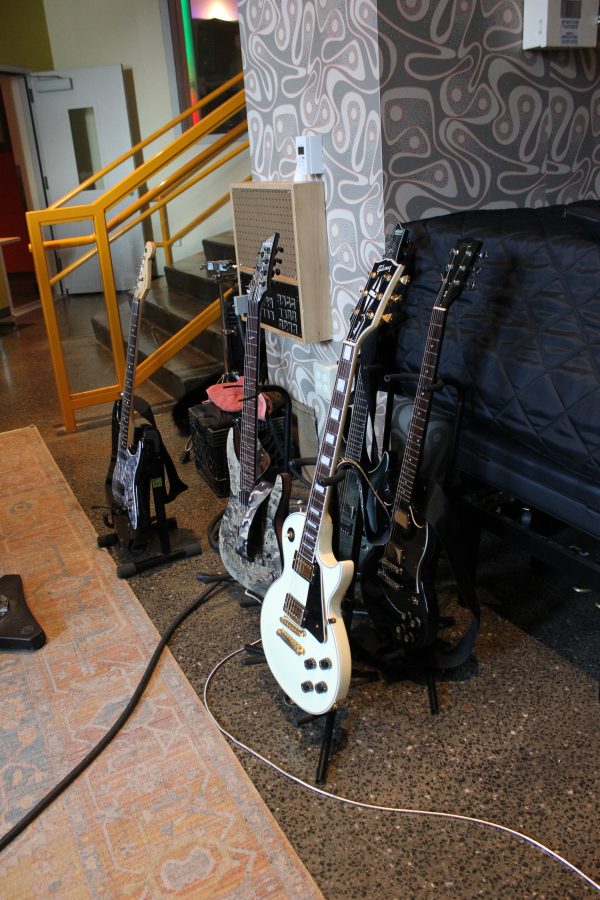
BILL FOSTER: That’s already four pretty different guitars. Why so many?
BRUCE: Because they don’t sound or respond the same way.
The Les Paul with the Black Winters gives me one thing. The SG with the Angry Widows gives me something else.
Then the two Schecters give me the extended range when I need it.
Changing the guitar can change the character of a part before you touch anything else.
BILL FOSTER: What do the Black Winters do for the Les Paul?
BRUCE: They’re aggressive, but they have a lot of definition.
That’s important with some of these riffs.
I want heavy, but I still want to hear the individual notes and the pick attack.
BILL FOSTER: And the Angry Widows?
BRUCE: Big, cutting sound.
Plus an SG naturally reacts differently from a Les Paul, so that guitar has its own personality.
BILL FOSTER: Why two different seven-strings?
BRUCE: Because they have different pickups.
The Omen-7 has the Heretic set, and the KM-7 has a Nazgûl in the bridge and a Sentient in the neck.
The Heretic bridge pickup has a really strong, aggressive voice. It hits hard, but it still feels open enough that the riffs don’t turn into one big blur. It’s a great pickup for that guitar.
The Nazgûl in the KM-7’s bridge is a little more focused and mean. It has that tight, punchy thing that works really well for heavy rhythm parts, especially when I want the low end to stay controlled.
They’re both great. The Omen has a slightly broader, more muscular feel, while the KM-7’s bridge pickup gives me a tighter, more locked-in sound.
So I’m not carrying two seven-strings just for the sake of having two seven-strings. They give me different flavors.
BILL FOSTER: And you’re mostly talking about the bridge pickups there?
BRUCE: Yeah, especially for the heavy rhythm work.
That’s where I notice the biggest difference. The bridge pickup is doing a lot of the work when I’m trying to get that tight, aggressive attack.
The neck pickups are useful for other sounds, but for the main riffing and leads, the bridge positions are what separate those guitars for me.
BILL FOSTER: So one isn’t replacing the other.
BRUCE: No, not at all.
They’re both really good guitars. Sometimes I want the Omen’s bigger, more forceful thing. Other times the KM-7’s Nazgûl bridge pickup gives me exactly the bite and control I need.
BILL FOSTER: Anything else electric?
BRUCE: There’s a black Strat with a Seymour Duncan Dimebucker and a Babicz tremolo.
That’s the stunt guitar.
BILL FOSTER: The what?
BRUCE: Stunt guitar.
[Laughs.]
BILL FOSTER: I’m going to need you to explain that.
BRUCE: That’s the one I grab when something needs tremolo abuse, dive bombs, weird noises or some other form of guitar misconduct.
It’s for stunt work.
BILL FOSTER: So the Les Paul gets the close-up and the Strat gets set on fire and thrown off a building.
BRUCE: Figuratively.
BILL FOSTER: Any acoustics?
BRUCE: Yeah. There are a couple of acoustics on “Three Days Under” and “On Causeway.”
There’s also mandolin on “Three Days Under.”
BILL FOSTER: How did a mandolin get onto a B.F. Raid record?
BRUCE: Because it sounded right.
There wasn’t a meeting where we decided the album needed mandolin.
[Laughs.]
That part of the song needed another texture, and the mandolin worked.
BILL FOSTER: What are you using for distortion on the electric stuff?
BRUCE: The main distortion is a Wampler Dracarys.
Then there’s an MXR Distortion+ and a Seymour Duncan La Super Rica fuzz.
BILL FOSTER: What makes the Dracarys the main one?
BRUCE: I can get it extremely heavy without losing definition.
That’s particularly useful when you’re layering guitars.
The MXR gives me another distortion character, and the La Super Rica is there when I want something nastier and more unpredictable.
BILL FOSTER: I hear a lot of things happening around the guitars on this record too. What’s handling the effects?
BRUCE: A huge amount of that is Eventide.
There’s a lot of H90 and H9 on Combat Zone.
BILL FOSTER: How are you running them?
BRUCE: Stereo into a Marshall JCM 2000 and a Vox AC30.
BILL FOSTER: Okay, now you’ve got my attention. Why those two amps?
BRUCE: Because they’re so different.
I can get the weight, low mids and thump from the Marshall and more upper-mid and high-end sparkle from the Vox.
Then the H90 and H9 are working in stereo across those two different amp voices.
That opens up a massive amount of space.
BILL FOSTER: So when I hear something moving across the stereo field, that’s not necessarily two separately recorded guitar tracks.
BRUCE: Exactly.
It could be the Eventides working across the Marshall and Vox.
And they can do far more than conventional delay or modulation.
Pitch shifting, filtering, ambience, movement—there’s an enormous amount you can do.
Sometimes the guitar ends up barely sounding like a guitar.
BILL FOSTER: Is that why there are things on the record that sound almost synth-like?
BRUCE: In some cases, yeah.
There are keyboard textures on a couple of songs, but they’re pretty sparse.
A lot of the unusual sounds are actually processed guitars.
BILL FOSTER: How important did the Eventides become while you were making the album?
BRUCE: Very important.
They’re all over it.
The thing I love about the H90 and H9 is that they can lead you somewhere you didn’t originally expect to go.
You start with a guitar part and discover a sound that suddenly changes the atmosphere of the whole section.
Sometimes it’s obvious. Sometimes it’s way behind everything else and you just feel the depth and movement it adds.
They became part of the production rather than something we simply added afterward.
BILL FOSTER: Do you remember the first time you heard that whole stereo Marshall/Vox/Eventide setup and thought, “Okay, this is something”?
BRUCE: Yeah, because it stops feeling like you’re just listening to a guitar amp.
You’ve got these two very different amp voices and the Eventides can interact with that stereo field in all kinds of ways.
You can make the guitar feel enormous without simply piling more distorted guitars on top of each other.
That became a big part of the Combat Zone sound.
BILL FOSTER: Where did you record the album?
BRUCE: At The Record Co. in Boston with Jamie Rowe engineering.
BILL FOSTER: How much experimenting was happening once you were actually in there?
BRUCE: Quite a bit.
The foundations of the songs were there, but we left room to discover things.
That’s one of the reasons I like recording.
A sound can suggest a different part.
Something Jamie plays can change what I do.
Moose can take the bass somewhere unexpected.
Bill can approach a vocal differently and suddenly we’re rearranging something.
You want enough structure that you know what song you’re making, but enough freedom that the band can still surprise itself.
BILL FOSTER: You’ve known Jamie for a long time too, right?
BRUCE: Around forty years. We’ve been in two bands together.
There’s definitely a musical shorthand there.
I can bring him something pretty strange and he usually figures out what I’m trying to do quickly.
Then he’ll do something I hadn’t thought of, which is the whole point.
BILL FOSTER: And then there’s a guest on “Punchdrunk.” How did that happen?
BRUCE: That’s Dave “Dizza” Allen.
I played on U.S.A. Decay’s “No Punks Allowed” back in 1987.
Almost forty years later, Dave ends up doing a rap performance on “Punchdrunk.”
BILL FOSTER: Was rap always part of that song?
BRUCE: No. It developed into that.
And once Dave did it, it worked.
That’s another example of not worrying too much about what is or isn’t supposed to be on a heavy metal record.
BILL FOSTER: I’m starting to get that impression. We’ve got rap, mandolin, acoustics, seven-strings, a stunt Strat, fuzz, Indian-influenced ideas and an Eventide stereo rig feeding a Marshall and a Vox.
BRUCE: When you list it all at once, it sounds like somebody should have been supervising us.
[Laughs.]
BILL FOSTER: Apparently nobody was.
BRUCE: Thankfully.
BILL FOSTER: Has what you want from yourself as a guitar player changed since you were a teenager?
BRUCE: Completely.
When you’re young, it’s easy to get caught up in technique.
Who’s faster? Who knows more scales? Who can play the most complicated thing?
I still practice. I’m still learning. I’m still experimenting.
But technique is vocabulary.
BILL FOSTER: Does that philosophy apply to owning guitars?
BRUCE: Absolutely not.
BILL FOSTER: I didn’t think so.
BRUCE: Completely separate issue.
That’s research.
[Laughs.]
BILL FOSTER: Last question. If somebody finds Combat Zone twenty years from now and they’ve never heard B.F. Raid or maybe never even been to Boston, what do you hope they hear?
BRUCE: Hopefully a good record first.
Beyond that, I hope they get a sense of the Boston behind these songs—the people, places and experiences.
And I hope they hear a band.
I bring a lot of ideas to the table. Bill brought “On Causeway” and “Down But Not Out.” But once any song gets into the room, Jamie, Moose, Bill and I all contribute to what it becomes.
That’s the part that matters.
We weren’t trying to recreate what B.F. Raid sounded like in 1983, and we weren’t trying to chase whatever somebody thinks metal should sound like in 2026.
We wanted to find out what B.F. Raid sounds like now.
Combat Zone is the answer.
BILL FOSTER: Combat Zone by B.F. Raid. Bruce Owens, thanks for talking with TMRZOO.
BRUCE: Thanks, Bill.
BILL FOSTER: I do have one more question.
BRUCE: Here we go.
BILL FOSTER: Can I try the stunt Strat?
BRUCE: Yes—but you have to wear a helmet.
[Laughs.]


